18-Liter V8 From a Tank Transporter Makes This the King of Classic Land Rovers
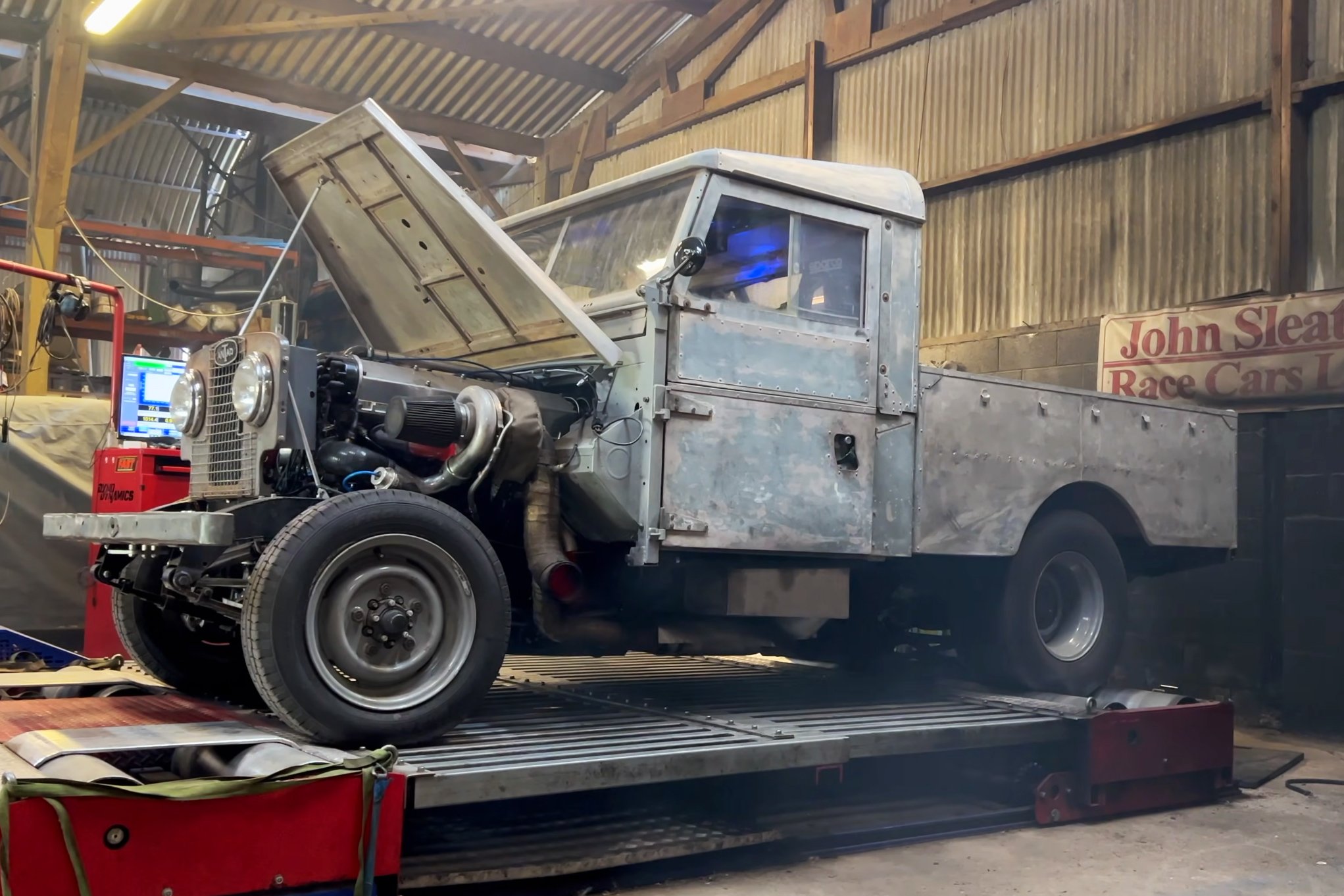
A custom Land Rover now packs an 18-liter Meteor V8 from a military tank transporter, nine times larger than stock, destined for drag racing.
2 comments
Sign in to join the discussion.
Sign inThis drag-strip curiosity cuts against every principle of modern powertrain packaging and crash energy management—stuffing an 18-liter tank engine into a chassis designed for post-war austerity creates mass distribution and crumple-zone dynamics that would horrify any ISO 26262 safety case. The builder's presumably eliminated any structural compliance zones that might absorb frontal impact energy, while the engine mass alone likely exceeds the original vehicle's entire curb weight. The restomod trend does highlight a strategic blind spot: OEMs racing toward electrification often underestimate the revenue and brand loyalty locked in heritage platforms. But these one-off combustion spectacles also underscore why emissions and pedestrian-protection regulations evolved—uncontrolled torque delivery and archaic restraint systems made vintage vehicles lethally unpredictable. Operators running mixed fleets with legacy assets should audit whether grandfathered exemptions create liability exposure, especially as automated emergency braking becomes baseline expectation even in specialty applications.
This spectacle underscores why certification authorities worldwide are tightening amateur-built vehicle standards—power-to-weight extremes like this would never meet type-certification for even experimental airworthiness, yet ground vehicles slip through with minimal oversight until something catastrophic occurs. The restomod economy thrives precisely because legacy platforms predate modern crashworthiness and emissions validation, creating a regulatory arbitrage that neither scales nor informs future mobility architecture. For regional operators eyeing hybrid-electric retrofits of aging fleets, the lesson is procedural: certification pathways must be established *before* metal gets cut. The romance of combustion theater fades quickly when insurance underwriters see your liability exposure or when cross-border operation requires compliance documentation you cannot produce.

