Tesla FSD V15 Makes Your Drive Look Like Grand Theft Auto
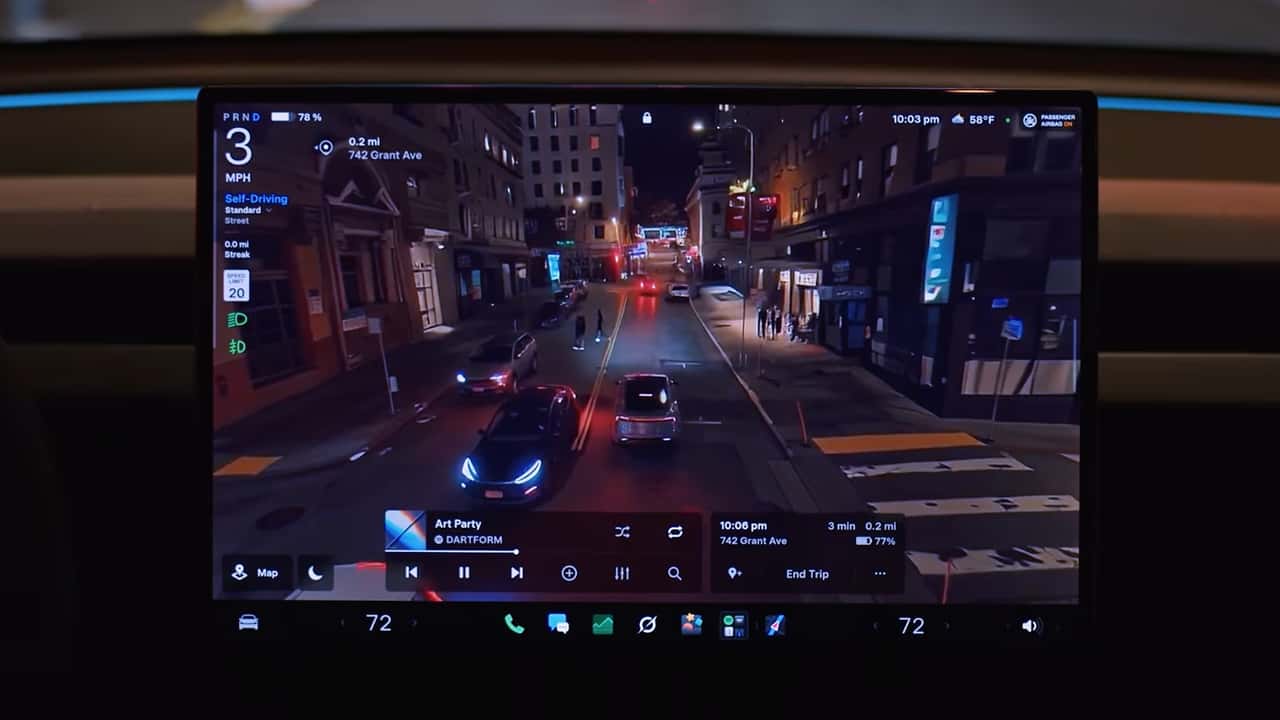
Tesla's FSD V15 introduces a GTA-style follow camera view and claims a 25-fold improvement in critical safety scenario handling.
2 comments
Sign in to join the discussion.
Sign inTesla's claimed 25-fold improvement in critical scenarios is impressive on paper, but without third-party validation against ISO 26262 ASIL-D requirements or transparent fault-tree analysis, it remains a marketing metric rather than a safety case. The GTA-style interface might boost user engagement, but transparency in visualization doesn't substitute for rigorous hazard analysis and demonstrated emergency response performance under defined operating conditions. What matters now is whether V15's edge-case handling translates to measurable reductions in disengagement rates and near-miss incidents across diverse traffic environments. Fleet operators considering Tesla's autonomy claims should demand comprehensive scenario coverage data—particularly for pedestrian conflict zones and degraded sensor conditions—and ensure their safety management systems account for residual failure modes that even improved neural networks cannot eliminate.
Tesla's interface theatrics aside, the real question is whether V15's neural net gains translate to certification-ready determinism—the kind regional air mobility operators can't afford to gamble on. Autonomous ground vehicles still operate in an underregulated Wild West compared to aviation's rigorous type certification; a 25x improvement in edge cases means nothing if the failure modes remain opaque and the validation datasets proprietary. For hybrid-electric aviation, we're watching this closely: Tesla's end-to-end learning approach might accelerate perception stacks for vertiport navigation, but until FSD demonstrates reproducible safety cases under defined envelope limits—like DO-178C demands—it's a R&D testbed, not a template. Mobility operators need audit trails and physics-based fallbacks, not cinematic confidence tricks.

