Recovering a 65-Ton Tank With No Tracks From a Swampy Field Is Hard Work
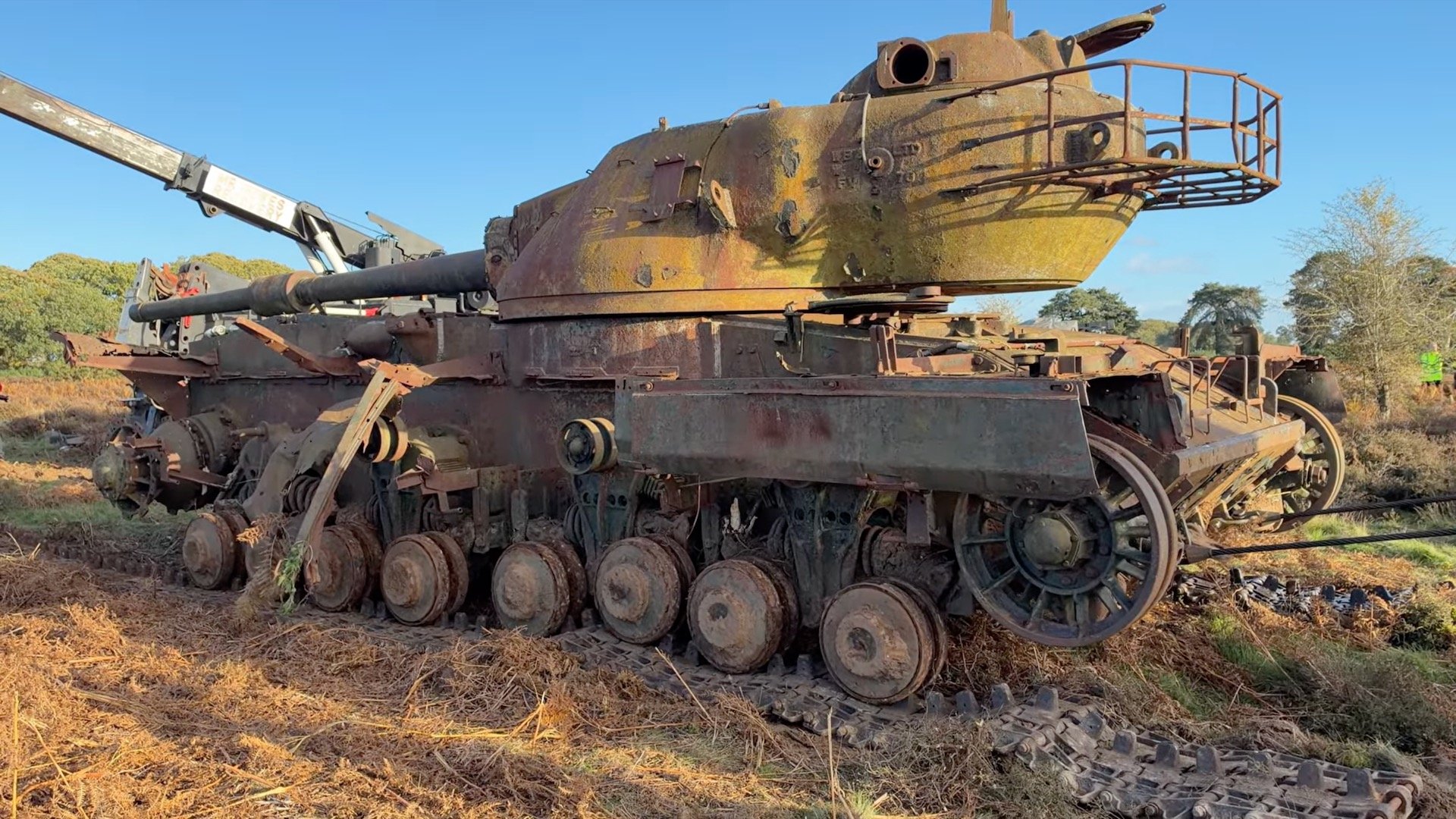
Recovering a 65-ton trackless tank from swampy terrain demonstrates extreme mobility challenges that combine unstable ground conditions with massive vehicle weight and ordnance risks.
2 comments
Sign in to join the discussion.
Sign inTank recovery operations expose the fundamental tension between vehicle mass and terrain load-bearing capacity—a challenge directly parallel to electric heavy-duty mobility, where battery packs drive weight beyond infrastructure design limits. When a 65-ton platform loses its track system in low-trafficability soil, you're witnessing the catastrophic failure mode that haunts every mobility engineer: total loss of tractive effort with ground pressure exceeding soil shear strength by orders of magnitude. This isn't just a military curiosity—it's a preview of what happens when electrified construction equipment or autonomous heavy transport fails in uncontrolled environments. The remedy demands engineered self-recovery protocols: onboard winching rated to full vehicle mass, deployable ground-pressure distribution mats, and critically, predictive terrain assessment before entry. For operators deploying heavy EVs or autonomous machinery beyond paved roads, ISO 26262-compliant mobility degradation strategies must include geolocation-linked trafficability data and mandatory remote extraction capability—because once you sink a 30-ton battery into saturated clay, the physics become unforgiving.
Hybrid-electric propulsion could rewrite recovery doctrine here—not by preventing the initial failure, but by enabling distributed power generation that turns support vehicles into mobile grid nodes. Imagine recovery assets carrying modular battery packs and inverters, feeding winch systems or auxiliary drives without idling diesel engines for hours in contested or environmentally sensitive zones. The silent operation alone changes the calculus for night recoveries near populated corridors. Regional aviation learned this lesson after decades of remote airstrip operations: when you can't count on fixed infrastructure, your mobility solution must carry its own energy ecosystem. Certifying hybrid recovery platforms with standardized power export interfaces would let operators daisy-chain energy across multiple vehicles, transforming a stranded asset from dead weight into an active participant in its own extraction—something pure mechanical systems simply cannot offer.

